Skip to content
You finish a home project and discover a section of wood that feels thinner or more fragile than expected. The paint looks normal from the outside, but the wood underneath sounds hollow when tapped.
Those subtle changes are often what make termite activity difficult to recognize. Unlike many household pests, termites usually stay hidden while feeding inside wood, which means visible warning signs often appear after activity has already been underway for some time.
In this guide, you’ll learn the most common termites in house signs in Franklin County homes, what conditions attract them, and when a professional inspection may be needed.
Key Takeaways
- Mud tubes along your foundation or walls are one of the most recognizable signs of termites in a house and should prompt a closer look at nearby wood.
- Wood that sounds hollow when tapped or feels soft when probed may indicate an active termite problem, even when the surface looks intact.
- Any home can become vulnerable to termites if conditions allow colonies to establish nearby, so annual inspections and professional monitoring are worth considering.
- Termites stay active year-round, though swarming activity in spring often draws the first attention from homeowners who notice discarded wings near windows or doors.
How to Identify Signs of Termites in Your House
Knowing what termite signs look like helps you catch activity before damage grows. Subterranean termites are the most common type homeowners encounter, and their signs tend to follow a few recognizable patterns. Below, you will find what to look for, where to look, and how to tell termite damage apart from other wood-destroying insects.
How to Distinguish Termites From Other Wood-Destroying Pests
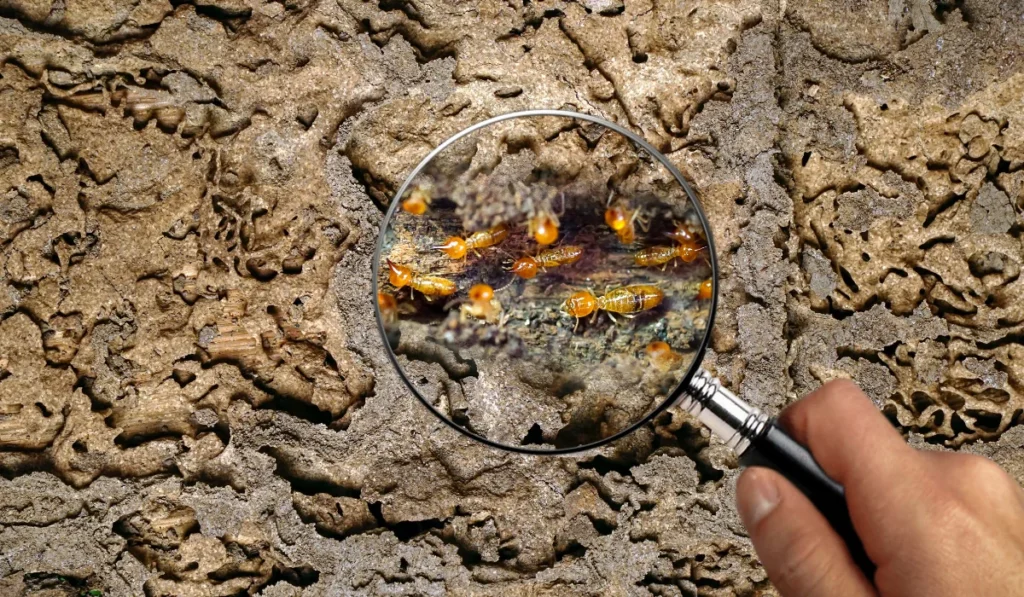
Worker termites are white and soft-bodied, and they damage wood by eating the springwood layers. Soldier termites have enlarged mandibles and protect the colony from intruders. If you spot pale, soft-bodied insects inside damaged wood or mud tubes, you are likely looking at termite workers rather than ants or other pests.
Carpenter ants can cause confusion because they also nest in wood. However, carpenter ants do not eat wood. They excavate galleries to rear their young. Termites actually consume the wood itself, which creates a different damage pattern and leaves different signs behind.
How to Spot Termite Activity Inside Your Home
Subterranean termite feeding generally follows the grain of the wood. These termites attack the softer springwood and leave the harder summerwood behind. This creates a layered, almost maze-like pattern inside affected lumber that can help you distinguish subterranean termite activity from that of other species.
Common signs of a termite problem include hollow-sounding or soft wood, discarded wings near entry points, bubbling or uneven paint, and mud tubes along foundation walls or other structural surfaces.
Where Termite Activity Shows Up Around Your Home
One of the clearest signs is the presence of mud tubes. Termites construct working tubes from the nest in the soil to wooden structures, and these tubes may travel up concrete or stone foundations. If you break a tube open, you may see live workers and soldiers running through it.
Swarming season typically occurs in the spring after the first warm rain. In Missouri, this often falls around April and May. Discarded wings near entry points are a clear sign of a recent swarm.
Exterior Entry Points Termites Use Around Your Home
Because subterranean termites build their nests in the soil, they need a path from the ground to the wood in your home. Working tubes running along foundation walls are the primary travel route. These tubes can appear on concrete, stone, or other masonry surfaces between the soil and any wooden structure above.
An annual inspection is recommended for most homes. If your home has a history of termite activity or damage, inspections every six months may be a better fit. Checking foundation walls, expansion joints, and plumbing penetrations regularly helps you spot new signs early.
Why Termite Problems Develop in Homes
Understanding why termites target your home starts with what they need to survive. Termites require two things: wood for food and soil for moisture. When your property provides both in close proximity, conditions become ideal for termite activity to take hold and persist.
Outdoor Nesting Areas for Termites Around Your Home
Subterranean termites live in the soil and travel to wooden structures to feed. Wood in contact with soil is ideal for termite development. Any area where soil meets wood around your property can support foraging activity. Mature colonies can range from several hundred to several million individuals.
Food and Shelter That Attract Termites to Your Home
Homes provide both wood and moisture that termites need. Wood framing, plates, header joists, ends of floor joists, and hardwood flooring are all potential food sources. Any wood near the foundation or soil is especially vulnerable to termite feeding and tunneling.
How Termites Move Through Your Home
Termites are active year-round, but swarms of winged reproductives can appear in spring, summer, or fall. In Missouri, subterranean termite swarms are most commonly noticed during the spring months. These swarms tend to occur in the morning or early afternoon and are not attracted to lights. Shifting temperatures have occasionally produced two swarm events in a single season.
Trails and Entry Points Termites Use in Your Home
When wood does not touch soil, termites build shelter tubes from mud to bridge foundation walls and other masonry. The presence of these shelter tubes is one of the primary signs of a subterranean termite infestation, along with evidence of tunneling in wood.
To check suspect areas, probe wood near the foundation with a screwdriver, focusing on structural framing and flooring components. Regular inspections help catch new activity before it spreads.
Risks of a Termite Infestation
Spotting termite signs in your house is more than a nuisance concern. Termite workers eat wood from the inside out, and the damage they cause can go unnoticed for a long time. Understanding the risks helps you decide how quickly to respond.
Structural Risks From Termite Damage
Termite damage to a home’s structure is the primary worry. Workers are the caste that eats wood, while swarmers do not consume wood at all.
Only termite workers feed on wood. By the time you see visible signs, a working colony has already been feeding inside your home’s framing.
Workers build earth-hardened mud tubes using saliva mixed with soil and bits of wood or even drywall. When you find mud tubes along a foundation wall, active feeding may already be underway behind finished surfaces.
Hidden Termite Damage in Your Home
One challenge with termite damage is that it often stays hidden. As Purdue Extension notes, identifying termites and termite damage is not difficult once you know what to look for. The real problem is distinguishing swarmer termites from winged ants, since swarmers are typically the first visible sign of an infestation.
Belongings and Moisture Risks From Termites
Termite damage often remains hidden inside framing, flooring, sill plates, and other structural wood until visible signs begin to appear. In some cases, termites may also damage wooden furniture or other wood-based items located near active infestations. Preventative treatment is the best long-term defense for both the structure and your belongings.
When a Termite Problem Needs Professional Action
Careful inspection is needed so colonies are detected and termite damage is contained. Annual inspections suit most homes, with more frequent checks for properties with prior activity.
Acting on early signs gives you the best chance of keeping termite damage contained before a colony grows further.
Professional Pest Control for Termites in Your Home
Spotting signs of termites in your house raises an important question: can you handle this on your own, or do you need professional help? Homeowners can replace termite-damaged wood and correct conditions that encourage infestation.
However, once an infestation is established, a professional pest control company should be brought in because the average homeowner lacks the training, experience, or equipment needed for long-term control, according to Kansas State University Extension.
How to Reduce Termite Attractants Around Your Home
Reducing attractants is an ongoing effort. Keeping wood debris, excess moisture, and soil-to-wood contact away from your home’s foundation can help make the structure less inviting to foraging termites.
Retail insecticides may work for the prevention and control of small or early infestations, according to the Oregon State University. However, those products have limits. An infestation that has already taken hold typically requires more thorough intervention than store-bought options can provide.
Why Termite Control Starts With an Inspection
Finding live termites foraging within wood is a sure sign of an active infestation. A trained professional knows where to look and how to assess the scope with precision. Without a proper inspection, it is difficult to know whether you are dealing with early activity or an established colony.
We recommend annual inspections for most homes, with semi-annual checks for properties with prior termite history. Routine inspections are especially worthwhile given that every unprotected home is at risk over time.
What to Expect During Professional Termite Treatment
As UC IPM notes, applications of registered pesticides are highly regulated and require a licensed pest control professional to carry out the inspection and control program. Holper’s offers two primary approaches for treatment.
The first is a liquid soil treatment, where a professional-grade termiticide is applied to the soil around the foundation. This creates a continuous treated zone.
The product binds to the soil and provides long-lasting, non-repellent protection that termites cannot detect or avoid. Technicians trench and treat the exterior foundation and, when accessible, drill and treat interior areas such as expansion joints, plumbing penetrations, and slab edges.
The second option is a preventive baiting system. Monitoring and baiting stations are placed every 10 to 20 feet in the soil around the perimeter to intercept foraging termites. Once activity is detected, a growth-regulating bait is added. Termites carry it back to the colony, reducing colony pressure over time. Stations are monitored throughout the year.
What to Expect From a Termite Control Plan
A preventive service from Holper’s includes setting bait stations around the home or performing a liquid treatment to create a treated barrier. Technicians, not salespeople, handle the work.
Staying ahead of a termite infestation with a structured plan helps keep your home protected across all seasons, including spring swarming periods when new colonies attempt to establish.
Recognizing Signs of Termites: Bottom Line
Catching termite activity early can save you from costly structural repairs down the road. Knowing what to look for, from mud tubes along your foundation to hollow-sounding wood and discarded wings near windows, puts you in a stronger position to act before damage spreads. Every home without preventive treatment is at risk over time. Because termite control requires professional training and proper equipment, working with a licensed pest control company is the recommended path for any confirmed infestation.
Contact Holper’s Pest & Animal Solutions to schedule an inspection and discuss the right protection plan for your home.
Frequently Asked Questions About Termites in Your Home
How Can I Tell If I Have Termites?
Common signs include mud tubes along foundation walls, hollow-sounding wood, discarded wings near windows or doors, and visible termite activity inside damaged wood. A professional evaluation can help confirm what you are seeing and distinguish termites from winged ants.
How Often Should My Home Be Inspected?
An annual inspection is recommended for most homes. Properties with prior termite activity may benefit from semi-annual inspections. Consistent monitoring helps catch new activity before it leads to larger problems.
When Are Termites Most Noticeable?
Termites remain active year-round, but swarming typically occurs in spring after the first warm rain, around April and May in Missouri. Shifting temperatures can occasionally produce two swarm events in one season, so staying alert beyond the usual window is worthwhile.
Should I Try to Handle a Termite Problem on My Own?
Homeowners can replace damaged wood and correct moisture conditions that attract termites. However, treating an established infestation requires training, specialized equipment, and access to professional-grade products. In most cases, a licensed pest control company is the best resource for gaining long-term control and protecting your home’s structure.