
Looking for wasp control in University City, MO this February? Our team provides effective solutions to address wasp activity and nests before they become a larger problem in the spring.
As a locally operated pest control provider, we are dedicated to serving our neighbors throughout the University City community.
Our reputation is built on providing effective and reliable wasp control solutions that homeowners have come to trust.
While wasps are dormant during the Missouri winter, February is an ideal time to address old nests and prepare your property before spring activity begins.
We have the expertise to handle overwintering queens and nests, helping to prevent larger infestations when the weather warms up.







Even during a chilly February in University City, our local pest experts begin with a thorough inspection to locate overwintering queens hiding in your eaves or attic voids.
We move to the treatment phase by applying specialized products to these dormant nesting sites, which effectively handles wasp control before the weather warms up.
For example, our prevention strategy involves treating potential entry points now to disrupt the lifecycle, ensuring your property remains protected against aggressive stinging insects later in the season.
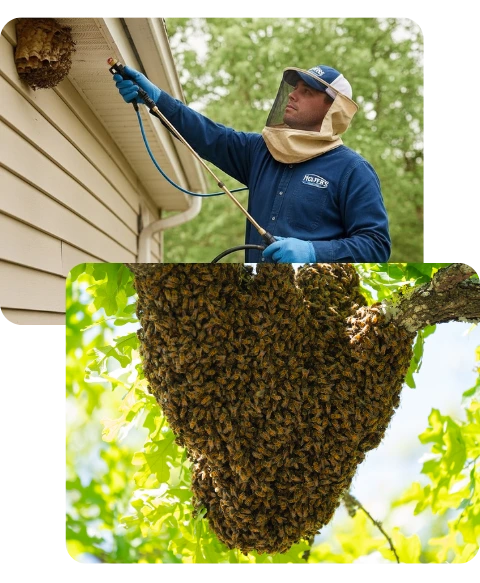
Meet University City Wasp Control Experts Missouri

Co-owner

Co-owner

Commercial Sales Manager

Field Operations Manager
University City wasp control, serving nearby areas
Tell us what pest you’re dealing with, and we’ll take it from there
By submitting, you agree to receive text messages from Holper’s Pest & Animal Solutions Pest & Animal Solutions at the number provided, including those related to your inquiry, follow-ups, and review requests, via automated technology. Consent is not a condition of purchase. Msg & data rates may apply. Msg frequency may vary. Reply STOP to cancel or HELP for assistance. Acceptable Use Policy
Call for immediate assistance and service.
Have questions? You’re not alone. Here are some helpful answers.
During the winter in University City, wasps are typically dormant, which can make addressing potential nesting sites more straightforward.
A one-time service for wasp control generally ranges from $99 to $250.
The final cost depends on factors like your home’s size, the accessibility of the nest, and the specific type of wasp, with recurring plans like our Silver and Platinum packages offering seasonal coverage.
While wasp activity is minimal during the winter months like February in University City, it is the perfect time to plan for their return in spring.
We do not offer monetary refunds for our services.
Our focus is on providing effective treatments, and our recurring service plans are designed for season-long control.
For example, our Platinum Package includes two seasonal power sprays specifically targeting wasps to help prevent nests from establishing on your home.
During the winter months like February, wasp activity in University City is typically dormant as queens hibernate and old nests are inactive.
We understand your concern and can generally dispatch a technician to your home promptly to assess the situation.
Our technician will inspect for any active or overwintering wasps and can treat any accessible nests found on your structure.
We can also discuss our recurring service plans, which include preventative treatments for when wasps become active again in the spring.
We provide clear pricing based on the size of your home rather than standard free quotes.
Even in the cold of February, it is the perfect time to secure coverage before queens emerge from hibernation.
For example, our Platinum Package includes specific spring power sprays to target paper wasps attempting to build nests on your University City home’s eaves.
While wasp activity is lower in February, we know safety remains your top priority when planning for future services.
We use products that are considered pet-friendly once they are dry.
For example, we require that people and pets remain out of the treated area until the application has dried, which typically takes three to four hours.
This ensures effective control of nests without compromising safety.