
Looking for coyote removal this February? Our team provides professional and humane wildlife control solutions to safely manage coyote activity around your property and ensure your peace of mind.
We begin our coyote removal process with a thorough inspection of your St. Louis property to locate active dens or fresh tracks in the frozen winter ground.
Our local wildlife experts utilize humane trapping strategies to safely capture the animal.
For example, we place specialized traps in high-traffic corridors identified during the initial assessment.
Finally, we provide guidance on habitat modification to deter future activity during the active February mating season.
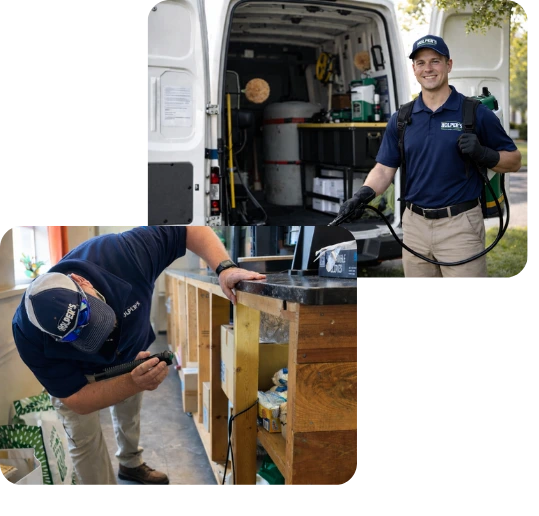






As a locally operated wildlife control company, we are dedicated to serving the St. Louis community.
Our team has earned the trust of local homeowners by providing effective and humane coyote removal solutions.
We understand that during the winter months in Missouri, scarce food sources can make coyotes bolder, leading to more frequent encounters near your home.
We focus on addressing the immediate coyote concern while also providing damage assessment and prevention strategies to secure your property for the long term.

Co-owner

Co-owner

Commercial Sales Manager

Field Operations Manager
Tell us what pest you’re dealing with, and we’ll take it from there
By submitting, you agree to receive text messages from Holper’s Pest & Animal Solutions Pest & Animal Solutions at the number provided, including those related to your inquiry, follow-ups, and review requests, via automated technology. Consent is not a condition of purchase. Msg & data rates may apply. Msg frequency may vary. Reply STOP to cancel or HELP for assistance. Acceptable Use Policy
Call for immediate assistance and service.
Have questions? You’re not alone. Here are some helpful answers.
During the winter months, coyotes may become more active near residential areas as they search for food.
The cost for our humane coyote removal services in the St. Louis area is determined following a complete inspection of your property.
Pricing varies based on the specific situation, including the number of animals and the complexity of the trapping and exclusion methods required.
Our goal is to resolve the conflict while also identifying and sealing potential entry points to prevent future issues.
During the winter, coyotes often become more active in their search for food, which is why our removal services are designed for persistent and effective results.
While we do not offer a money-back guarantee, our service is built on a commitment to resolving your wildlife conflict.
Our guarantee means we will continue to work on the problem until it is managed.
For example, if coyote activity continues after our initial trapping and removal efforts, we will return to reassess and adjust our strategy as part of our service commitment to you.
We understand the urgency of a coyote sighting, particularly during the winter months when food sources can be scarce and they may venture closer to homes.
Our team prioritizes wildlife calls and we work to dispatch a technician to your property as promptly as possible.
Upon arrival, our specialist will conduct a thorough assessment of the situation to create a customized and humane removal strategy.
During the winter, coyote sightings can become more frequent, and we understand you need a clear path to a solution.
We do not provide free quotes because each situation requires a thorough on-site inspection to create an effective and customized removal strategy.
Our process involves a detailed assessment of your property to identify the scope of the issue; for example, we look for activity patterns, potential attractants, and entry points.
The final price for service is determined by the specific trapping and exclusion plan developed from this initial, comprehensive inspection.
During the winter, we understand that the safety of your children and pets is the top priority when dealing with nuisance coyotes.
Our removal methods are centered around humane trapping techniques designed to be as safe and targeted as possible.
For example, we strategically place traps in locations that minimize the potential for interaction with pets or children and use methods that reduce the risk to non-target animals.